


Neewer NW Series S Variable ND and CPL Filter: 2-in-1 Filter
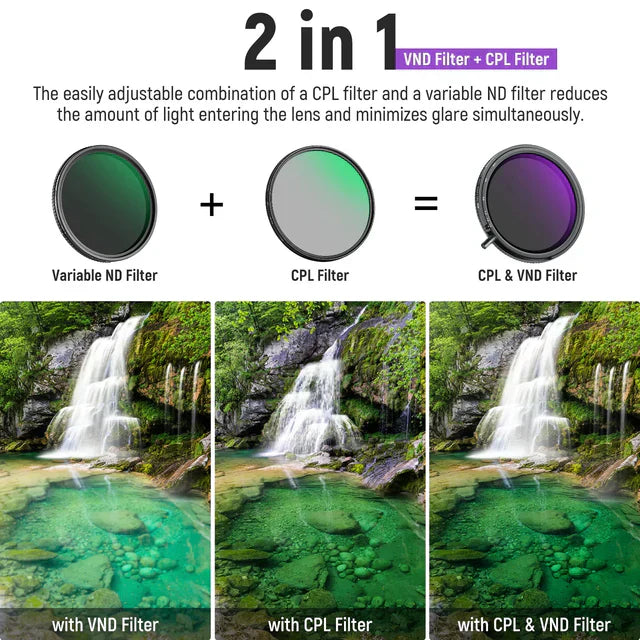
The Neewer NW Series S is a 2-in-1 filter that folds two essential tools into one piece of glass: a variable neutral density filter and a circular polariser. Instead of carrying separate ND and CPL filters and swapping them mid-shoot, you dial both effects from a single filter on the front of your lens.
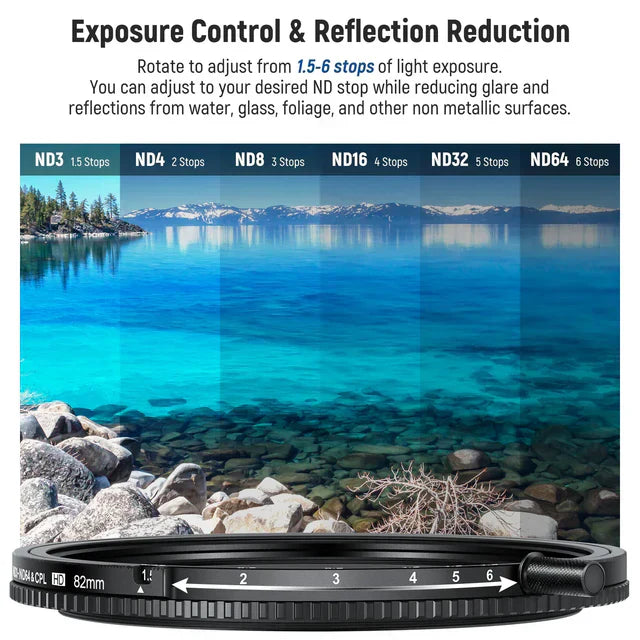
The variable ND runs from ND3 to ND64, giving 1.5 to 6 stops of light control from a hand knob. The built-in CPL cuts glare and reflections and deepens skies. Together they give you cleaner exposures and richer, true-to-life colour straight out of camera. This guide covers how it works, what the ND numbers mean, and how it compares to a standard filter.
Shop 2-in-1 ND & CPL Filters
Neewer NW Series S Variable ND and CPL Filter
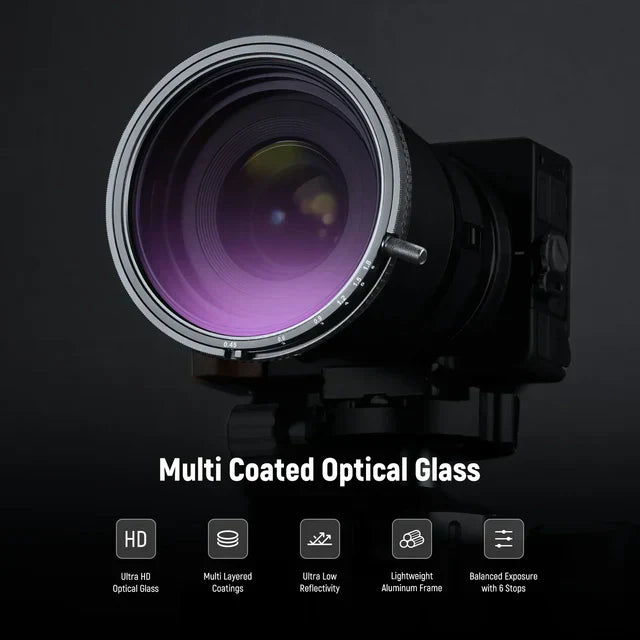
A 2-in-1 variable ND (ND3 to ND64, 1.5 to 6 stops) and circular polariser with multi-coated HD optical glass, an ultra-slim CNC aluminium frame, and a one-handed adjustment knob. True Colors rendering for accurate colour.
Shop 2-in-1 ND & CPL FiltersProduct features, per Neewer.
See the Filter in Action
TL;DR
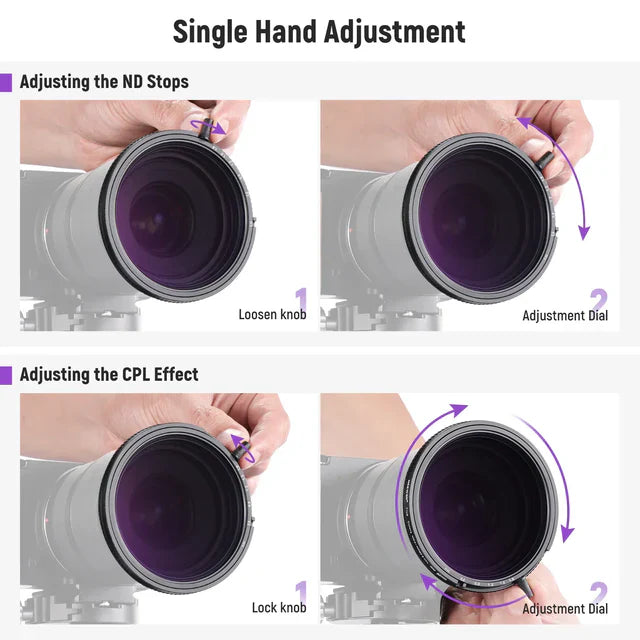
One filter that does the work of two. The Neewer NW Series S combines a variable ND (ND3 to ND64, 1.5 to 6 stops) with a circular polariser, so you control both exposure and reflections without swapping filters. Turn the knob to set the ND, lock it, then rotate to dial in the CPL. It uses multi-coated HD optical glass in a slim aluminium frame for true colour and no vignetting, and it comes in thread sizes from 49mm to 82mm. Lighter bag, faster shooting, richer colour straight out of camera.
What a Variable ND and CPL Filter Does
A neutral density filter is like sunglasses for your lens. It cuts the amount of light reaching the sensor without changing colour, so you can open the aperture wide in bright sun for shallow depth of field, or slow the shutter for motion blur on water and clouds. A variable ND lets you dial the strength up and down instead of carrying a set of fixed filters.
A circular polariser does something a sensor cannot fix later: it removes glare and reflections from non-metallic surfaces like water, glass, and foliage, and it deepens blue skies and saturates colour. Combining both in one filter means you manage light and reflections together, in a single movement, and react quickly when the light changes.
How a neutral density filter controls light, per Neutral-density filter, Wikipedia.
How a polariser cuts glare and deepens skies, as documented by Polarizing filter, Wikipedia.
ND Ratings and Stop Loss Explained
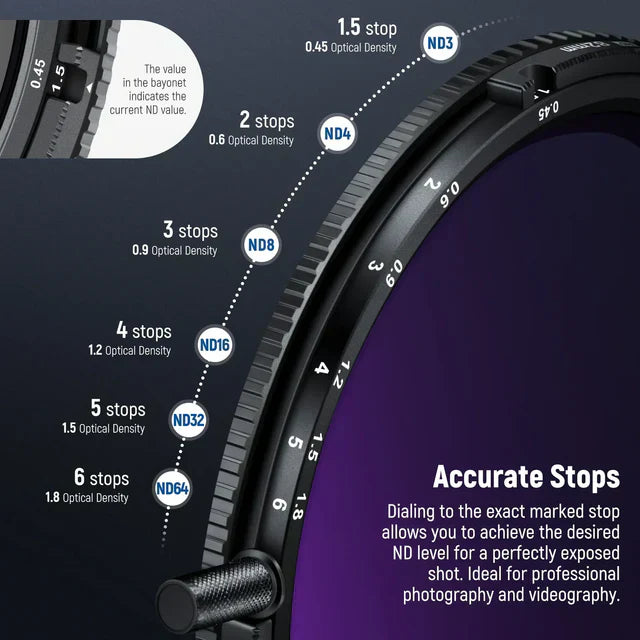
ND filters are labelled by how much light they block. Each ND number doubles as the numbers rise, and every doubling equals one more stop of light reduction. Here is what the NW Series S range covers, from ND3 to ND64.
| ND rating | Light reduction | Light let through | Typical use |
|---|---|---|---|
| ND3 | About 1.5 stops | Around 1/3 | A gentle trim in bright light |
| ND4 | 2 stops | 1/4 | Wider aperture in daylight |
| ND8 | 3 stops | 1/8 | Shallow depth of field outdoors |
| ND16 | 4 stops | 1/16 | Video shutter speed in sun |
| ND32 | 5 stops | 1/32 | Longer exposures in bright scenes |
| ND64 | 6 stops | 1/64 | Strong reduction for water and cloud motion |
ND strength to stops, per Neutral-density filter, Wikipedia.
How to Use It
The whole point is speed and simplicity. You set both effects on the lens without changing filters.
- Thread the filter onto your lens, choosing the size that matches yours, from 49mm to 82mm.
- Loosen the hand knob and rotate the filter to set the ND, anywhere from ND3 to ND64 (1.5 to 6 stops), until the exposure looks right.
- Lock the knob, then rotate the filter to dial in the polariser, watching glare and reflections fall away and skies deepen.
- Stay within the marked ND range. Pushing a variable ND past its limits, especially on wide lenses, can create a dark X-shape across the frame.
Why wide apertures give shallow depth of field, per Depth of field, Wikipedia.
What causes darkening across the frame, as documented by Vignetting, Wikipedia.
NW Series S vs a Typical ND Filter
A standard ND filter does one job. Here is how the 2-in-1 NW Series S compares to a typical single-function ND.
| Feature | Neewer NW Series S | Typical ND filter |
|---|---|---|
| ND strength | Variable, ND3 to ND64 (1.5 to 6 stops) | Usually a single fixed value |
| Built-in CPL | Yes | No |
| Two effects in one | Yes, ND and polariser | No, a separate filter needed |
| Lock knob | Yes, lock the ND then rotate the CPL | No |
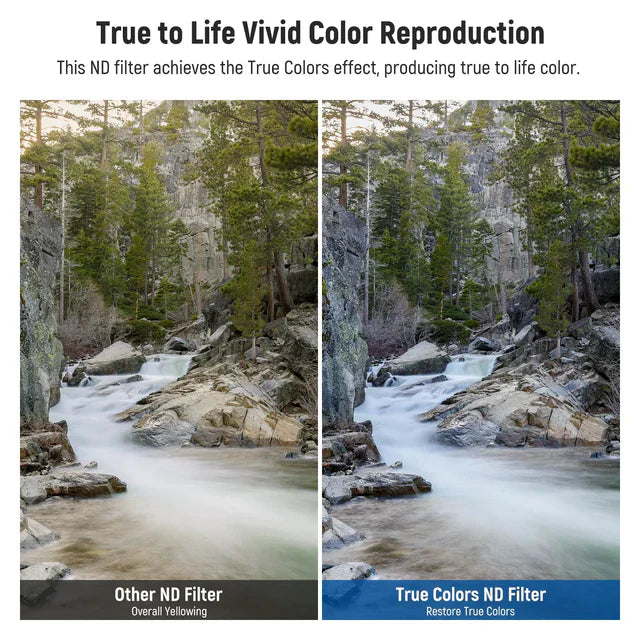
| True colour rendering | Yes, True Colors optics | Varies, cheaper glass can add a colour cast |
| Glass and coatings | Multi-coated HD optical glass | Varies by brand |
| Frame | Ultra-slim CNC aluminium, anti-vignetting | Varies |
| Protective coatings | Dust, oil, fingerprint, scratch, and water | Varies |
| Lens hood | No, the adjustment knob blocks it | Usually yes |
As specified by the manufacturer, Neewer.
Neewer NW Series S Specifications
| Specification | Detail |
|---|---|
| Model | NW Series S |
| Filter type | Variable ND and CPL, 2-in-1 |
| ND range | ND3 to ND64 (1.5 to 6 stops) |
| Thread sizes | 49mm, 52mm, 55mm, 58mm, 62mm, 67mm, 72mm, 77mm, and 82mm |
| Glass | Multi-coated HD optical glass |
| Frame | Ultra-slim CNC-machined aluminium alloy |
| Coatings | Anti dust, oil, fingerprint, scratch, and water |
| Adjustment | Integrated hand knob, one-handed |
| Application | Photo and video |
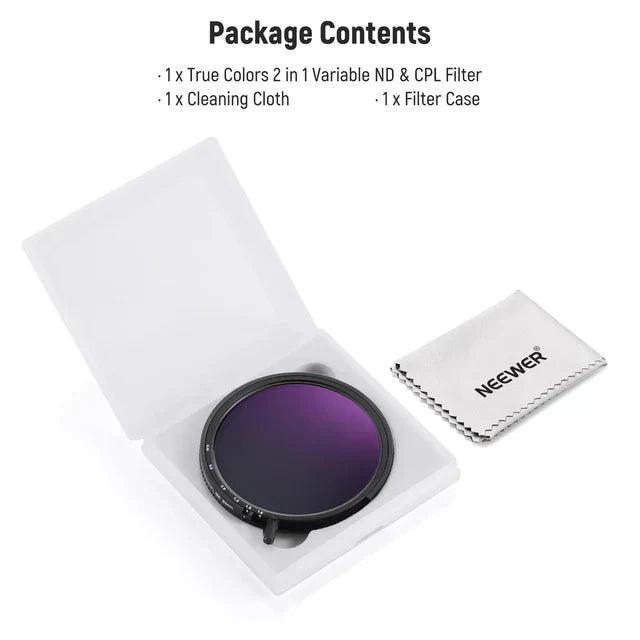
| In the box | Filter, filter case, cleaning cloth |
As specified by the manufacturer, Neewer.
Dos and Don'ts
Do:
- Check your lens thread size, marked with the diameter symbol, before ordering so the filter fits.
- Keep a lens cap over the filter when it is not in use to protect the glass.
- Store it in its case to keep it clean and safe in your bag.
Do not:
- Use a lens hood. The integrated hand knob prevents one from fitting.
- Rotate past the marked ND stops, or you may see a dark X-shape across the frame.
- Use a harsh cloth or chemical cleaner. Use the supplied microfiber cloth only.
Who It Suits
This filter is made for photographers and videographers who want a streamlined kit and a lighter bag. It is especially useful for landscape, travel, and portrait work in bright conditions, where harsh light and reflections are the daily challenge. For video creators, the variable ND holds a natural shutter speed in sunlight, while the polariser cleans up glass and water. Combining both in one filter means fewer pieces to carry and less time swapping gear. It also means one slot in your bag covers two jobs, so you stay ready as the light changes rather than digging for a second filter and risking the shot.
Neewer NW Series S FAQs
What thread size do I need?
The NW Series S comes in thread sizes from 49mm to 82mm: 49mm, 52mm, 55mm, 58mm, 62mm, 67mm, 72mm, 77mm, and 82mm. Check your lens for the diameter symbol followed by a number, usually on the front ring or inside the lens cap, and pick the matching size. If your lens sits between sizes, a step ring can bridge the gap.
Can I use a lens hood with it?
No. The integrated hand knob that adjusts the ND sits where a lens hood would attach, so a hood will not fit. In very bright, side-lit conditions, use your hand or a flag to shade the front element instead.
What is the dark X-shape and how do I avoid it?
Variable ND filters can show a dark cross across the frame when pushed to their strongest setting, especially on wide-angle lenses. Stay within the marked ND range on this filter and you will avoid it. If you see it, dial the ND back a little.
How do I clean it?
Use only the supplied microfiber cloth. Avoid rough cloths and chemical cleaners, which can damage the coatings. The filter's coatings already resist dust, oil, and fingerprints, so a gentle wipe is usually all it needs.
Where can I buy Neewer filters in South Africa?
You can buy Neewer filters from CameraStuff, an authorised Neewer dealer in South Africa. We offer 60-day returns, free delivery on orders over R1000, nationwide delivery, and a support team ready to help you match the right filter to your lens.

Conrad Knuist
Head of Marketing and Photography Specialist
Conrad Knuist is Head of Marketing and Photography Specialist at CameraStuff, South Africa's specialist camera and lighting retailer. With over 18 years of hands-on experience testing gear across portrait, event, and commercial photography, Conrad has personally handled hundreds of products, from entry-level speedlights to professional studio systems. He is an authorised Godox specialist and works directly with South African photographers and videographers to match the right tools to their work. Every review and recommendation he publishes is based on real-world use, not spec sheets.


Comments (0)
There are no comments for this article. Be the first one to leave a message!